

Postural Tension
in Bend, OR
Modern life asks a lot of our bodies: long hours at a desk, laptops, phones, driving, repetitive work, and daily stress. These can add up, leaving your neck tight, shoulders tense, upper back stiff, low back achy, or your body feeling like it’s slowly settling into discomfort.
Understanding Postural Tension
Postural tension refers to physical stress patterns that can develop when the body spends long periods in repetitive or sustained positions.
This commonly happens with:
Desk work
Prolonged computer use
Frequent phone use
Driving
Repetitive seated work
Working from less-than-ideal ergonomic setups
Stress-related muscle guarding
Over time, these patterns may contribute to:
Neck tightness
Shoulder tension
Upper back stiffness
Low back discomfort
Hip tightness
Headaches
Jaw tension
Discomfort that feels hard to “stretch away”
Why Stress Often Makes Postural Tension Worse
Posture is only part of the picture.
When the body feels physically overloaded, muscles may stay tense longer than necessary.
That can make already-strained areas (like the neck, shoulders, upper back, jaw, hips, and low back) feel even tighter or more easily aggravated.
For many people, desk work discomfort is not simply about “bad posture.” It’s often a combination of movement habits, stress-related tension, repetitive positioning, and reduced movement variety.
A Gentler Approach to Postural Tension Care
If your body already feels tense, sensitive, or easily aggravated, forceful care may not feel like the right fit.
At Vitality Chiropractic, care may include:
Gentle chiropractic adjustments
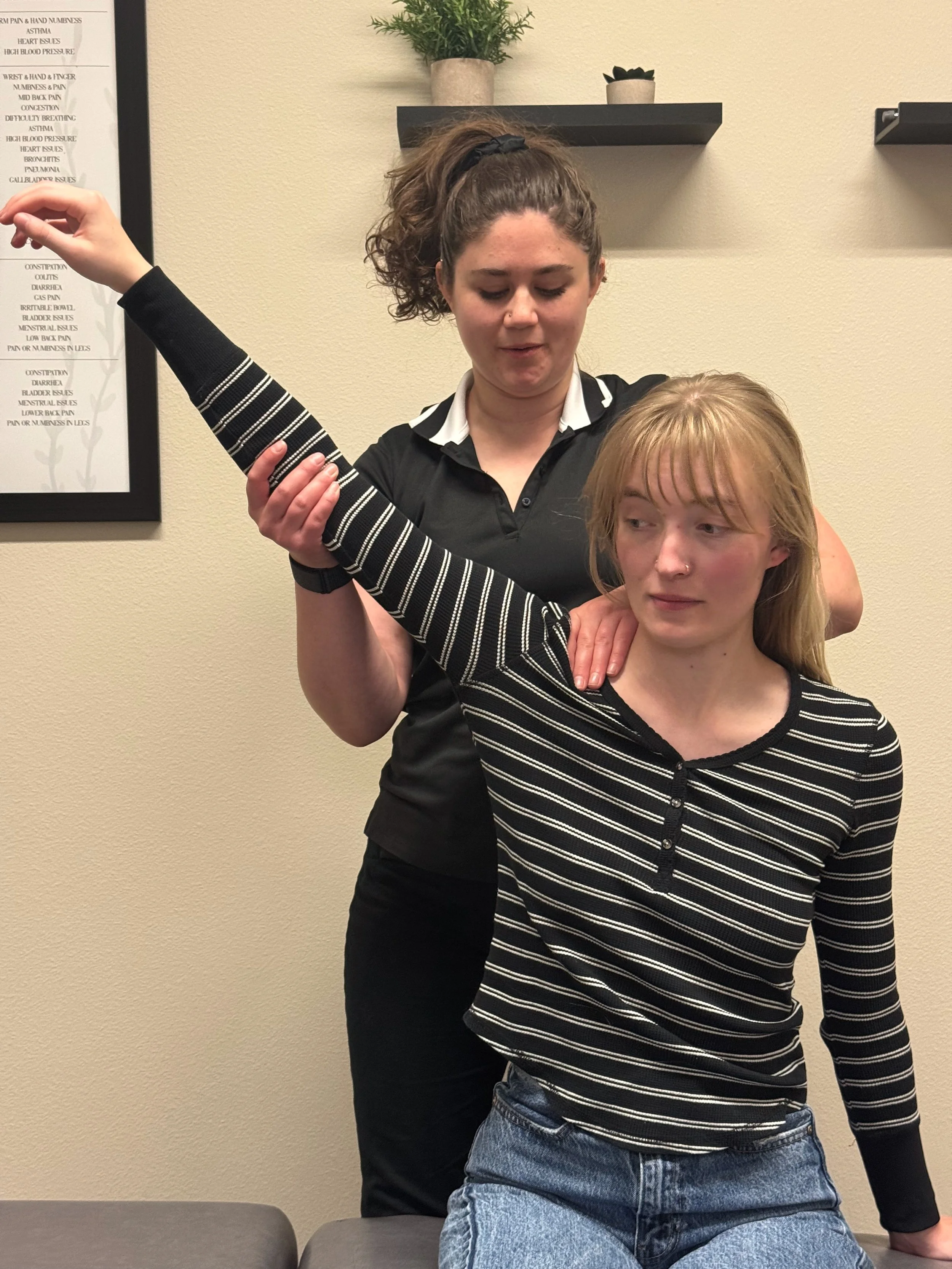
Evaluation of posture and movement patterns
Ergonomic guidance
Discussion of work habits and daily movement routines
Assessment of neck, shoulder, upper back, jaw, and low back tension patterns
Collaborative referral when appropriate
Our goal is to understand what may be contributing to your symptoms and provide individualized care that supports more comfortable movement and day-to-day function.

Is This the Right Fit for You?
This approach may be a good fit if you:
Work at a desk or computer for long hours
Notice recurring neck, shoulder, upper back, or low back tension
Experience headaches tied to work posture
Feel physically tense by the end of the day
Use your phone or laptop frequently
Prefer gentler chiropractic care
Are hypermobile and prefer a more thoughtful, stability-aware approach
Are sensitive to aggressive adjustment techniques
Want a more individualized care experience
Does This Sound Familiar?
You may relate if:
You spend long hours at a desk
Your shoulders always feel tight
Your neck feels stiff after computer work
Your posture worsens as the day goes on
Your lower back aches after sitting
You constantly stretch but never feel lasting relief
Headaches show up after long workdays
Your jaw, neck, and shoulder pain all seem connected
Sitting for long periods makes your body feel worse
Your upper back feels tight or “stuck”
You feel physically drained from simply sitting all day
If this sounds familiar, your body may be dealing with more than simple muscle tightness.
Ready to Start Care?
FAQs
Can chiropractic help with posture-related tension?
Chiropractic evaluation may help identify whether movement restrictions, posture-related strain, muscle tension, ergonomic stress, or other physical contributors may be playing a role in your symptoms. A thorough evaluation helps determine whether chiropractic care is appropriate for your specific presentation.
“Tech neck” is a commonly used term rather than a formal diagnosis, but prolonged screen use and repetitive forward-head positioning can contribute to neck, shoulder, and upper back discomfort for some individuals.
Is “tech neck” a real diagnosis?
What Is Tech Neck?
Tech neck” is a common term used to describe discomfort associated with prolonged forward-head posture and repetitive screen use.
This may feel like:
Neck tightness
Upper shoulder tension
Upper back stiffness
Tension headaches
Jaw clenching
Soreness between the shoulder blades
Discomfort after desk work
Needing to constantly stretch your neck
Not every case of neck or upper back discomfort is caused by posture alone. That’s why a thoughtful evaluation matters.
What if I’m sensitive to forceful adjustments?
That concern is more common than you might think—especially among patients whose bodies already feel tense or physically overloaded. If chiropractic care is appropriate, we take a gentle, individualized approach designed around your comfort level, history, and clinical needs.